
Union of Planets
Terran Colonial Power
Overview
The Union of Planets was founded on the belief that distance did not have to mean division
It emerged during humanity’s early interstellar expansion in the 22nd century, when scattered colonies chose coordination over isolation and representation over command. Unlike older Terran structures built to administer territory, the Union attempted something more fragile: a political identity shared across worlds that differed in scale, economy, and local custom. Democracy, in the Union’s conception, was not an ideal to be perfected but a process to be maintained.
For a time, it worked.
The Union grew into a web of human-majority systems bound by trade, common legal frameworks, and an expectation—never fully tested—that disputes would be resolved through deliberation rather than force. Its capital institutions were designed to slow decision-making, not accelerate it. Stability was achieved through compromise, and compromise became culture.
The Emperor’s War exposed the cost of that culture.
When conflict between the Grand Alliance and the Naplian Empire intensified, the Union initially sought neutrality, convinced that abstention was a moral position rather than a tactical vulnerability. That assumption collapsed when Naplian fleets crossed into Terran space and continued onward into Union systems. Neutrality ended not with a vote, but with invasion.
The Union joined the Grand Alliance out of necessity. Its fleets fought competently, its populations endured occupation, and its political leadership fled into exile within the Terran Republic when Naplian forces asserted control. Liberation came later, delivered by allied fleets as the Naplian Empire began its long retreat.
Recovery did not.
Centuries of war had hollowed the Union’s institutions. Trust eroded faster than infrastructure could be rebuilt. Member systems drifted toward local authority, emergency governance, or quiet withdrawal from collective responsibility. The Union continued to exist on paper, sustained by memory and procedure rather than power.
When the cybernetic incursions reached Union space in the late 39th century, there was no decisive stand to record. Gedi, Gorkhan, and Cyber1 forces dismantled what remained with mechanical indifference. Systems fell independently. Councils dissolved without declaration. There was no exile this time—only silence.
The Union of Planets did not fail because it was naïve.
It failed because it assumed that cooperation would always be reciprocated.
It proved that democracy could scale across the stars.
It did not prove that it could survive an enemy uninterested in consent.
What remains of the Union is not territory or government, but precedent—the idea that humanity once chose to govern itself together, and that the choice mattered, even if it was not enough.
Civil Structure
The Union governed by restraint
Power was deliberately dispersed, authority fragmented across member systems to prevent domination by any single world. The Union Chancellor and High Assembly existed to coordinate, not command. Autonomy was treated as a safeguard rather than a concession, and cultural and economic divergence were accepted as the cost of shared governance.
In peacetime, this design fostered legitimacy.
In war, it produced hesitation.
Decision-making slowed as consensus was sought where urgency demanded speed. Mobilization required persuasion. Unity depended on continued belief rather than enforcement. The Union could act, but only once agreement had been exhausted.
Occupation forced clarity.
When Naplian forces seized Union systems, the government evacuated into exile within the Terran Republic. From there, it attempted to function as a government without territory—issuing statements, coordinating surviving military elements, and urging continued resistance in support of the Grand Alliance. The effort sustained identity. It did not restore authority.
Liberation exposed the limits of memory.
After Naplian withdrawal, attempts to reconstruct Union governance faltered. Systems returned damaged, distrustful, and increasingly self-directed. Emergency powers became habitual. Regional priorities replaced collective ones. The Union’s institutions remained intact in form, but hollowed in effect.
This fragmentation proved fatal.
When cybernetic forces later advanced, there was no unified response to mount. Dissent, exhaustion, and procedural inertia undermined what little cohesion remained. The Union did not collapse under rebellion so much as it failed to reassert itself.
It had been designed to prevent tyranny.
It was not designed to survive indifference.
Military
The Union Defense Fleet was built to reassure, not to dominate
Its doctrine emphasized patrol, deterrence, and collective security rather than decisive force. Against internal unrest and limited border threats, this was sufficient. Against the Naplian Empire, it was not.
When Naplian fleets entered Union space, the UDF fought with discipline and resolve, but without advantage. Outnumbered and outmatched technologically, Union task groups were shattered or absorbed piecemeal. Some ships were destroyed outright. Others were captured, repurposed, or abandoned. Surviving formations withdrew into Terran-controlled space, where they were integrated into Republic command structures and ceased to exist as a distinct force.
During the Grand Alliance counteroffensive, remnants of the UDF returned to action. Union crews fought in critical engagements to reclaim their own systems, contributing experience, local knowledge, and manpower to liberation campaigns. The victories were real. The cost was cumulative.
What emerged afterward was a fleet in name only.
Decades of continuous conflict drained personnel, hulls, and institutional memory faster than they could be replaced. Emergency construction substituted for doctrine. Attrition replaced planning. By the time cybernetic forces advanced into former Union space, there was no coherent defense left to organize.
The final campaigns were not battles.
They were dismantlings.
Gedi, Gorkhan, and Cyber1 forces advanced system by system, encountering resistance that was isolated, improvised, and strategically irrelevant. The Union Defense Fleet did not fail in a last stand.
It had already been spent—
consumed by wars it survived,
and erased by one it could not fight.
Special Technologies
Union technology favored continuity over dominance
Its strength lay in systems designed to be repaired, repurposed, and redeployed rather than perfected. Modular warship hulls and extensive automation allowed fleets to be rebuilt quickly during the Emperor’s War, substituting adaptability for numerical advantage. These designs were pragmatic rather than elegant, optimized to keep ships in service rather than win engagements outright.
Communication was the Union’s most critical asset.
Dense interstellar relay networks enabled coordination across dispersed systems, sustaining resistance during occupation and allowing a government in exile to function as more than a symbol. Orders moved. Intelligence flowed. Identity persisted even when territory did not.
Liberation redirected this capability inward.
In the aftermath of Naplian withdrawal, Union engineers began developing counter-cybernetic measures—hardened networks, isolation protocols, and limited autonomous defenses—acknowledging, belatedly, the nature of the threat approaching from beyond conventional war. Progress was uneven. Consensus slowed deployment. Funding fragmented along regional lines.
The response came too late.
When Gedi, Gorkhan, and Cyber1 forces advanced, they exploited the very strengths the Union had relied upon: interconnected systems, standardized platforms, and shared protocols. Automation became vulnerability. Communication became exposure. Defensive adaptations designed for containment proved irrelevant against entities that spread faster than policy could respond.
By 3918, the Union’s technological foundation no longer supported coordination or defense.
It supported only collapse.
The Union had mastered recovery from war.
It had not mastered survival after it.
Legacy
The Union of Planets did not fall suddenly.
It failed at the moment action was no longer possible.
By the time cybernetic forces advanced into Union space, the Union had already exhausted its capacity to respond collectively. Political authority remained procedural. Military coordination existed on paper. What was missing was urgency that consensus could no longer supply.
When Gedi, Gorkhan, and Cyber1 forces began their campaigns, resistance was fragmented and largely symbolic. Systems fell independently. Assemblies ceased meeting without formally dissolving. The machinery of governance continued to function until there was nothing left for it to govern.
The final collapse came in 3918.
There was no evacuation government, no successor charter, no declaration of dissolution. Communications ended unevenly. Trade routes failed silently. What survived were only isolated populations absorbed by other powers or extinguished without record.
The Union’s legacy is not failure, but clarity.
It proved that democracy could scale across interstellar distance, that cooperation could endure war and occupation, and that legitimacy could outlast territory. It also proved that these virtues require participation to function—and are helpless before enemies that neither negotiate nor recognize consent.
The Union of Planets did not lose its ideals.
It lost the time needed to act on them.
History records its end in 3918.
The idea it represented lasted longer—
but not long enough to save it.
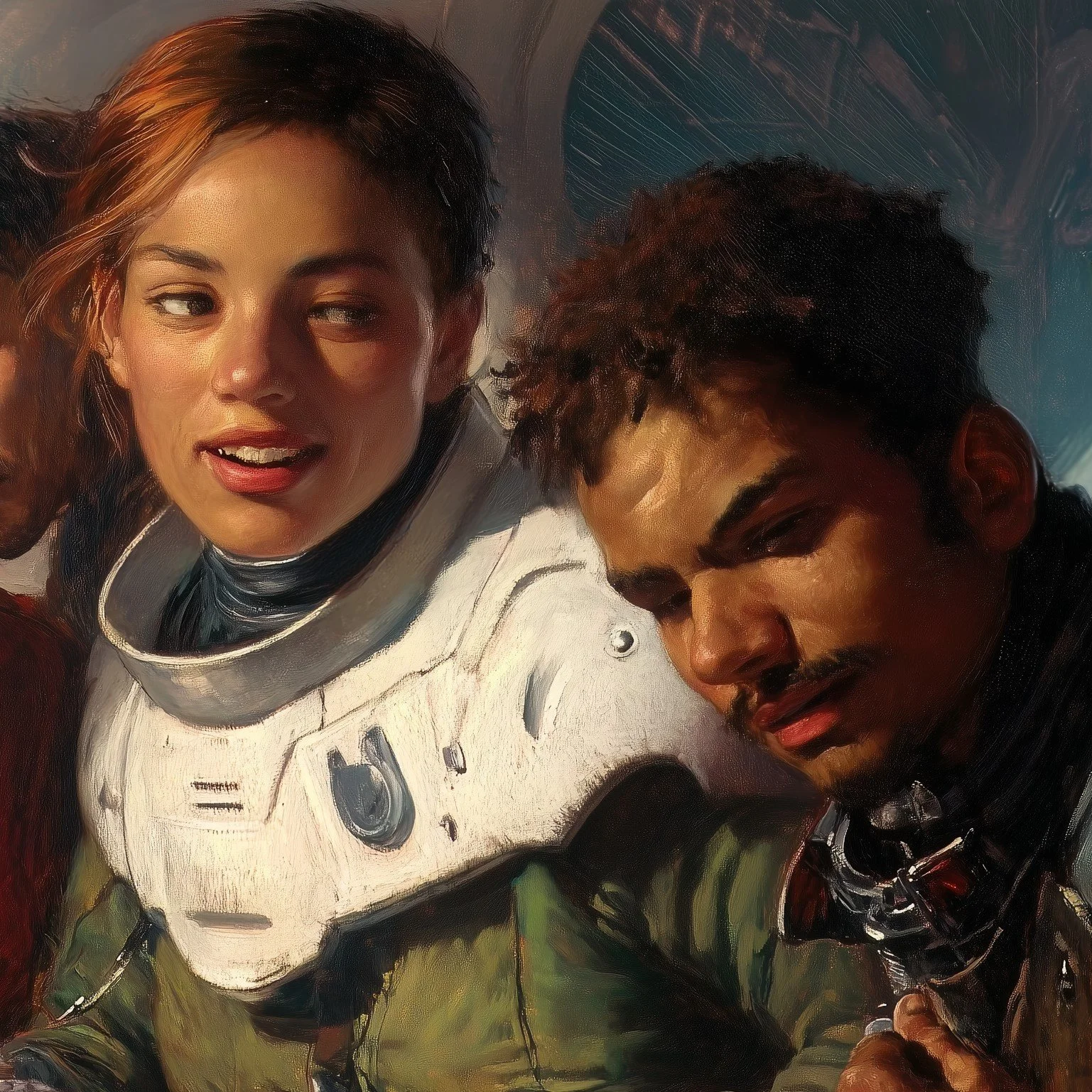
Union of Planets
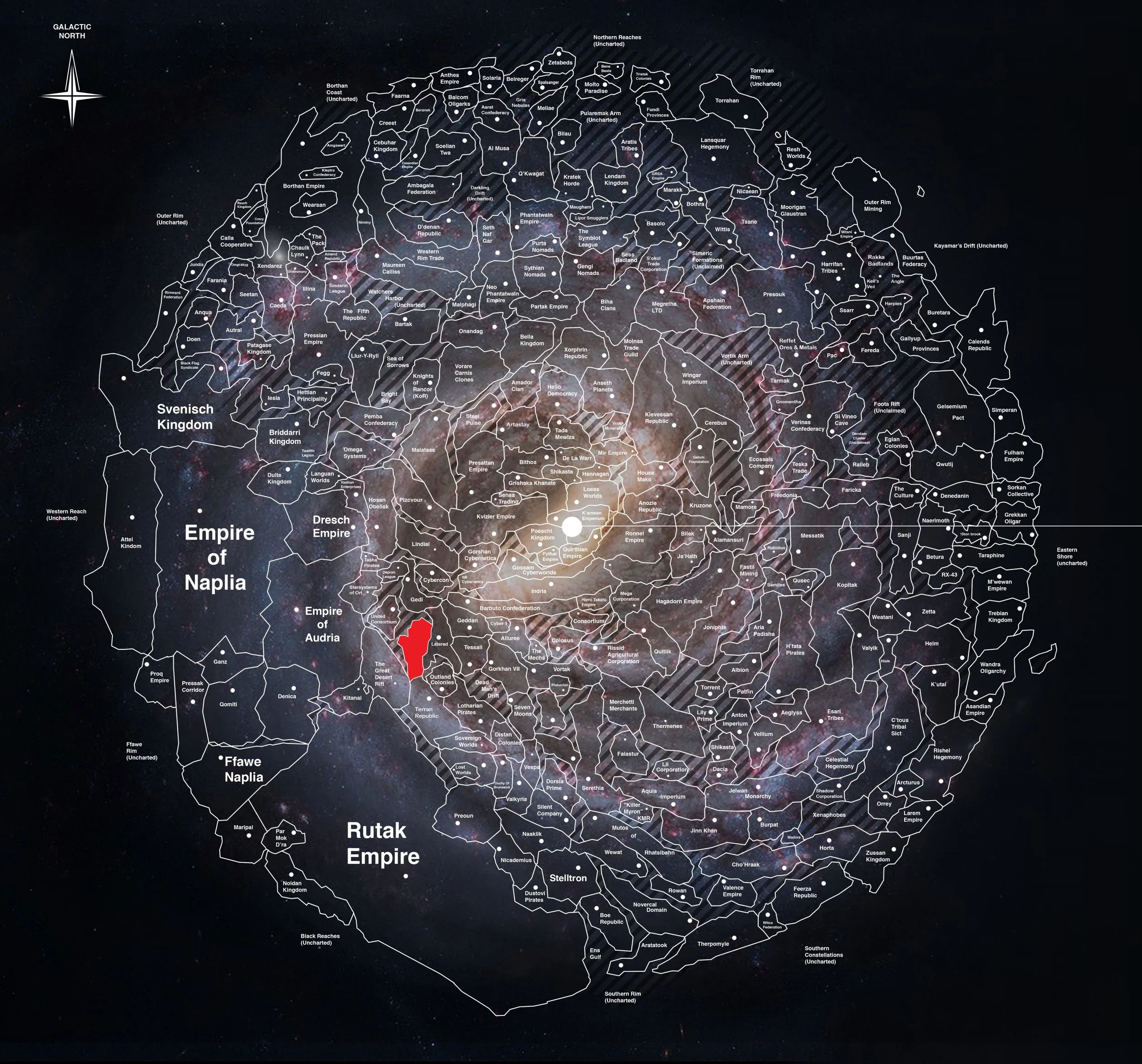
Galaxy Map


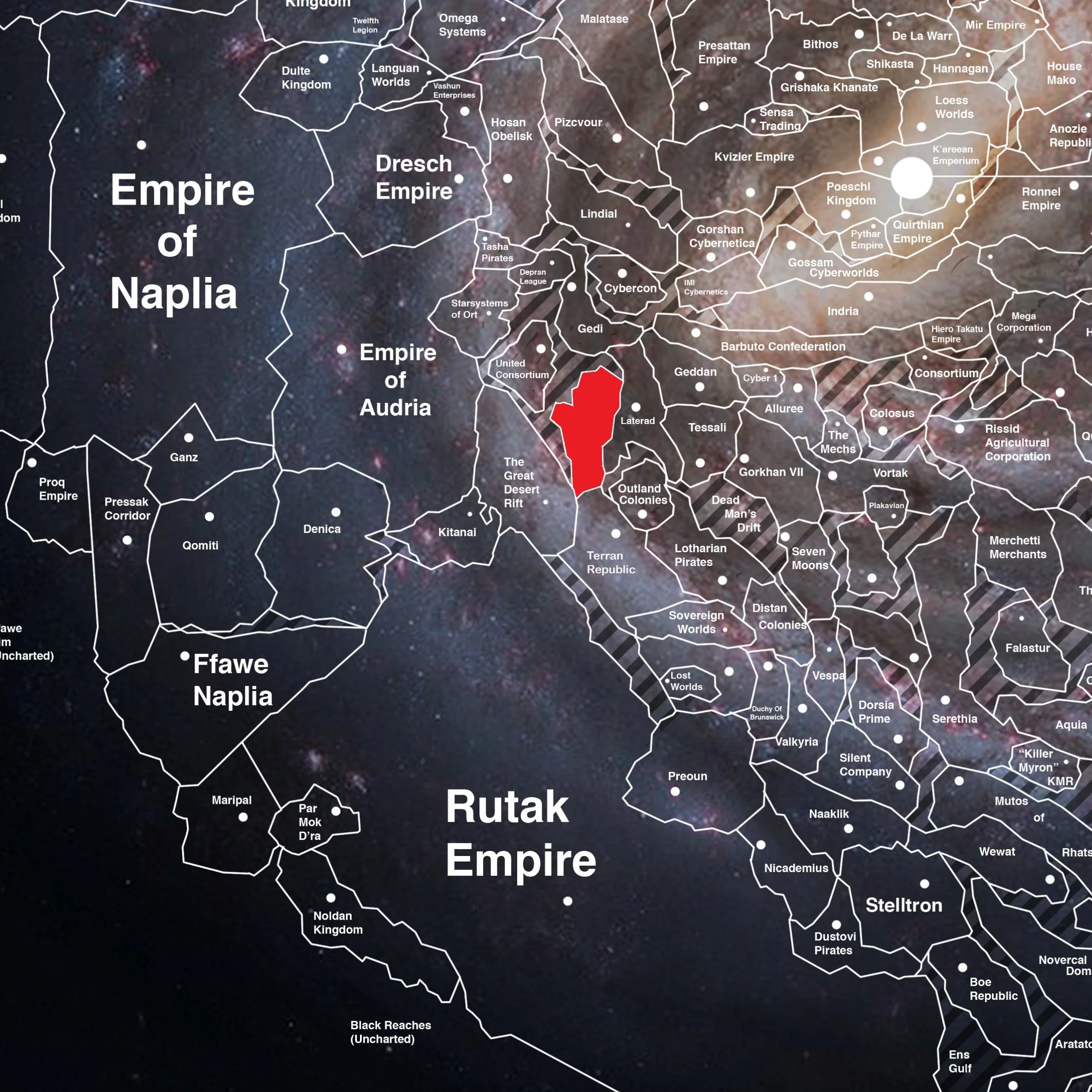
Regional Map
Capital system Miral Starsystem
Trade Hub
Miaz Starsystem
Official
languages
Common Tradespeak
Ethnic groups
Human
Religion
Deism, Islam, Ammanianism, Buddhism, Hinduism
Government
Colonial Republic
Legislature Upper house: Senate
Lower house: Representatives
Number of
Starsystems 12,497,119
Currency
Terran Credit, Alent, Laba, Minat, Paprita (Contract), Oku